

Text-Based Generative Models
Discover the leading text-based models and their applications, such as content creation, chatbots, and code generation. Explore their capabilities and limitations.

Image and Video Generation Models
Explore the capabilities of AI models that generate images and videos, their use cases in marketing, entertainment, and design, and the ethical considerations surrounding their use.

Audio and Music Generation Models
Examine the emerging field of audio and music generation using AI models, their applications in various industries, and their potential impact on the future of creative expression.
Understanding Generative AI: Models, Providers, and Use Cases
What is Generative AI?
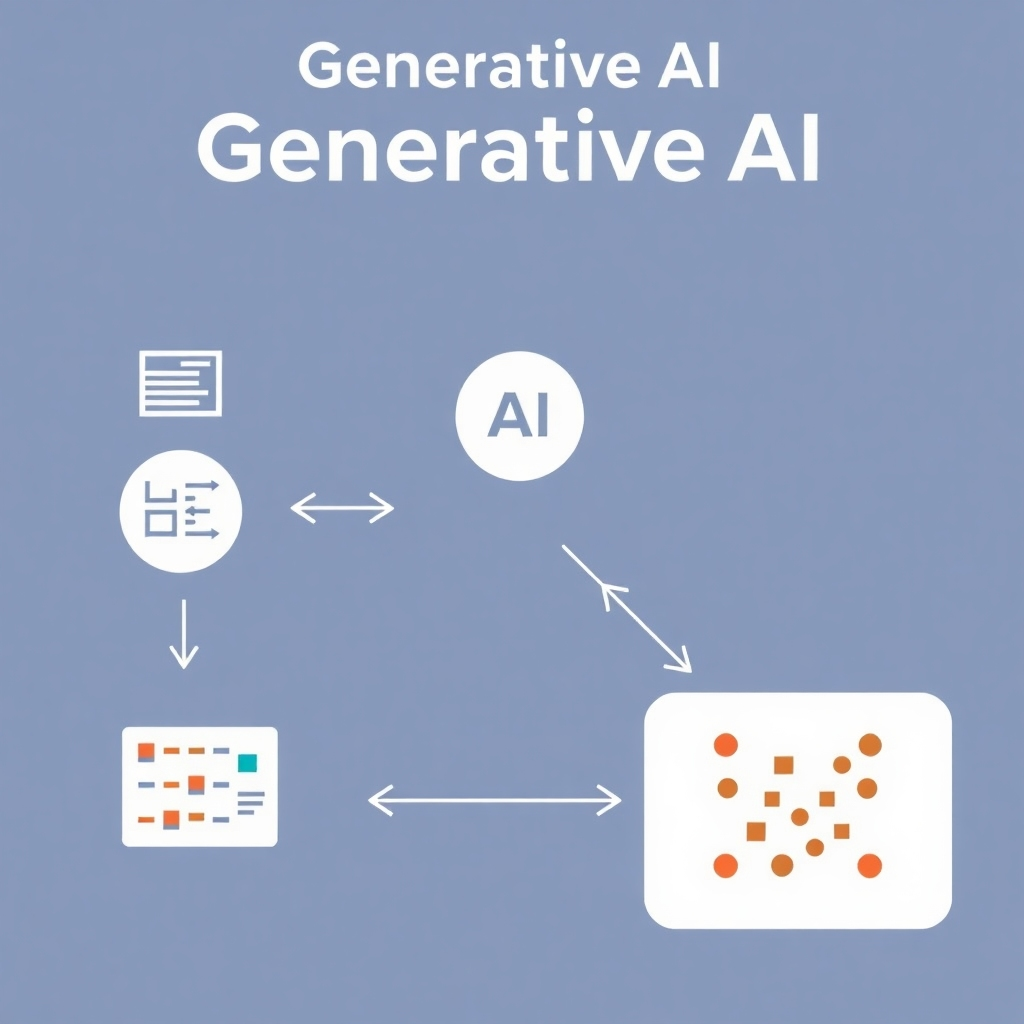
Gain a foundational understanding of generative AI, its core principles, and the various types of generative models available, from GANs to transformers.
Generative AI Use Cases Across Industries
Explore the diverse applications of generative AI across different sectors, including healthcare, finance, and entertainment, and examine the impact of AI on these industries.

The Future of Generative AI
Discuss the future potential of generative AI, its potential benefits and challenges, and the ethical considerations that need to be addressed as AI continues to evolve.
Understanding Generative AI: Models, Providers, and Use Cases
What is Generative AI?
Generative AI is a type of artificial intelligence that can create new content, such as images, text, audio, and video. It learns patterns from input data and uses this knowledge to generate similar but novel outputs. This contrasts with traditional AI, which primarily focuses on analysis and prediction. Several core principles underpin generative AI, including deep learning, neural networks, and large language models. Different types of generative models exist, each with its strengths and weaknesses. These include Generative Adversarial Networks (GANs), Variational Autoencoders (VAEs), and transformers, each employing unique architectures and training methods to generate diverse forms of content. Understanding these models is crucial to grasping the capabilities and limitations of generative AI.
Generative AI Use Cases Across Industries
The applications of generative AI are vast and rapidly expanding across numerous sectors. In healthcare, it aids in drug discovery, personalized medicine, and medical image analysis. Financial institutions leverage it for fraud detection, risk assessment, and algorithmic trading. The entertainment industry uses generative AI for creating realistic game environments, composing music, and generating scripts. Marketing and advertising benefit from AI-powered content creation, personalized recommendations, and targeted campaigns. Moreover, generative AI is revolutionizing design and manufacturing with AI-driven product design and optimization. The impact of generative AI on these industries is profound, increasing efficiency, automating tasks, and fostering innovation. However, it's crucial to consider the potential ethical implications and responsible implementation of this technology across all sectors.
The Future of Generative AI
The future of generative AI holds immense potential, promising advancements in various fields. We can anticipate more sophisticated models capable of generating even more realistic and nuanced content. This could lead to breakthroughs in areas like personalized education, scientific research, and artistic expression. However, the rapid advancement of generative AI also presents challenges. Concerns regarding job displacement, the spread of misinformation, and potential biases embedded within AI models need careful consideration. Ethical guidelines and responsible development practices are crucial to mitigate these risks. Furthermore, ensuring transparency and accountability in the use of generative AI is paramount to building trust and fostering responsible innovation. The future success of generative AI hinges on addressing these challenges proactively and responsibly harnessing its transformative power for the benefit of humanity.