Key Milestones in the Evolution of GPT Models

GPT-1: The Foundation
The initial GPT model, GPT-1, laid the groundwork for future advancements with its introduction of the transformer architecture. This marked a significant shift in natural language processing.
GPT-2 & GPT-3: Enhanced Capabilities
GPT-2 and GPT-3 demonstrated remarkable improvements in text generation, achieving higher fluency and coherence. They pushed the boundaries of what was possible with large language models.

GPT-3.5 & GPT-4: Refinement and Reasoning
GPT-3.5 and GPT-4 focused on refinement, improving reasoning capabilities and reducing biases. These models represent a significant leap towards more reliable and nuanced AI.
A Journey Through GPT: From Early Versions to Cutting-Edge AI
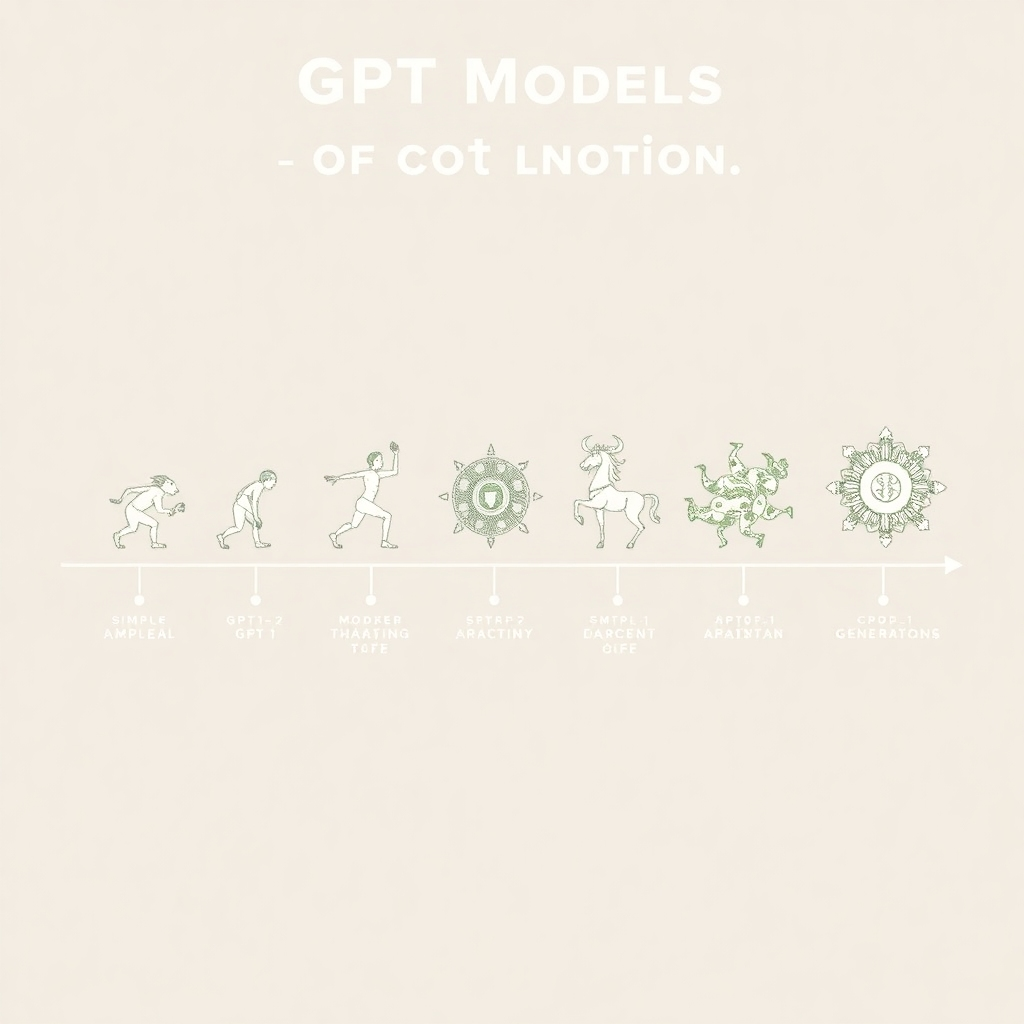
Early GPT Models: The Genesis
The initial GPT models were groundbreaking but had limitations in terms of context length and reasoning abilities. They represented a significant step towards more sophisticated AI.

The Rise of Large Language Models
The increase in model size and data used for training led to significant improvements in performance, resulting in more coherent and fluent text generation.

Current GPT Models and Future Directions
Modern GPT models are capable of impressive feats, but ongoing research focuses on addressing limitations and exploring new capabilities.
GPT Models: A Timeline of Innovation and Advancement
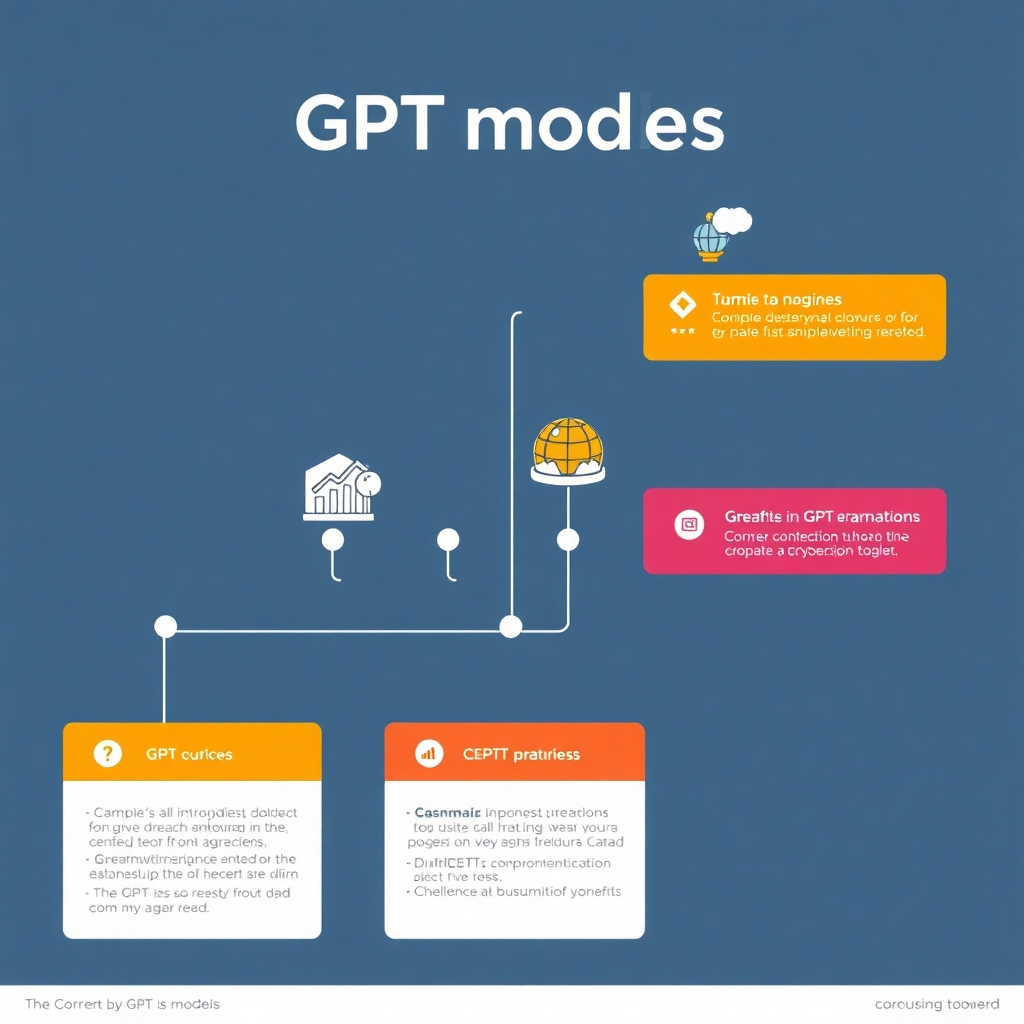
2018: GPT-1 - Transformer Architecture
The introduction of the GPT-1 model marked a pivotal moment, establishing the transformer architecture as a cornerstone of modern large language models.
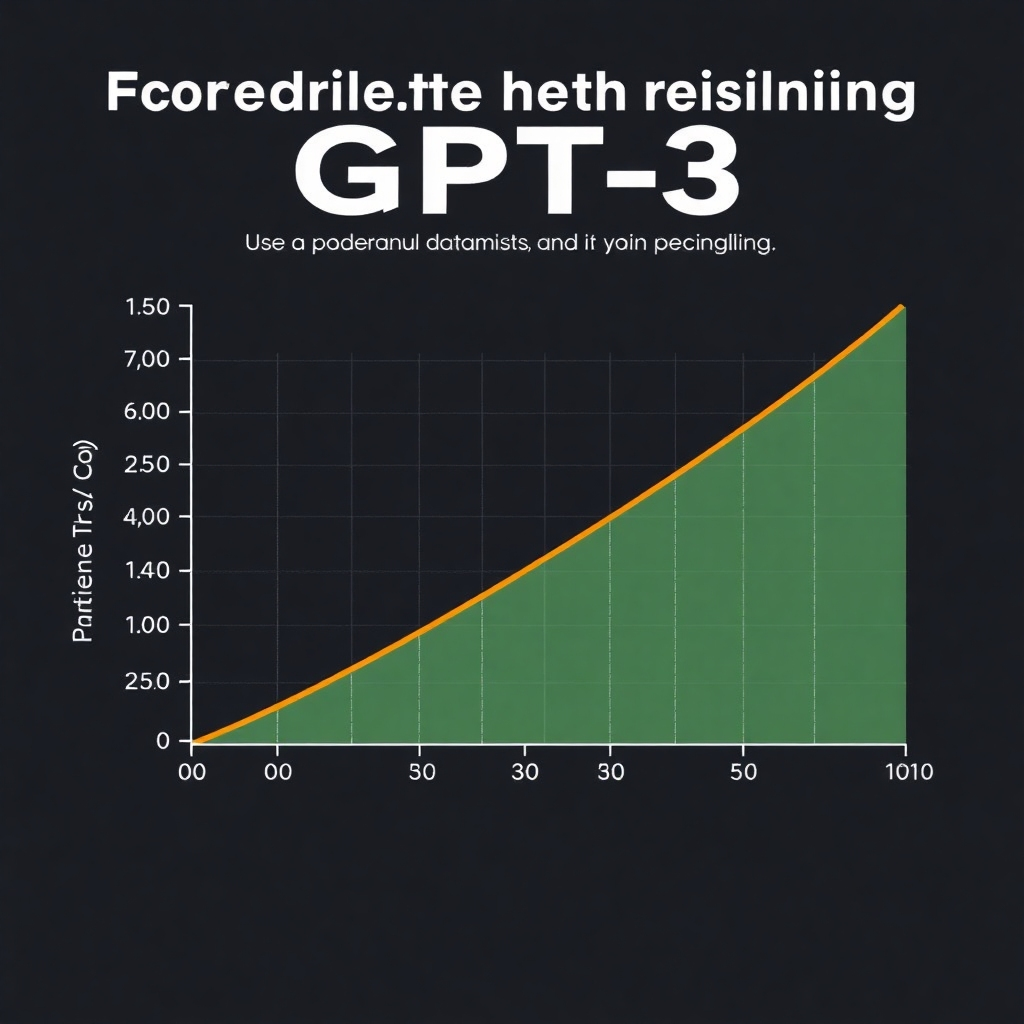
2019-2020: GPT-2 & GPT-3 - Scaling Up
GPT-2 and GPT-3 showcased the power of scaling up model size and data, leading to significant improvements in text generation quality and coherence.
2023 and Beyond: GPT-3.5 & GPT-4 - Refinement and Reasoning
Recent iterations have focused on enhancing reasoning capabilities, reducing biases, and improving overall reliability and performance.
GPT Evolution: From Foundation to Refinement
GPT-1, released in 2018 by OpenAI, was a groundbreaking model that introduced the world to the potential of transformer-based architectures for natural language processing (NLP). Before GPT-1, recurrent neural networks (RNNs) dominated the NLP landscape. RNNs, while effective for sequential data, suffered from limitations in processing long sequences due to the vanishing gradient problem. This meant that information from earlier parts of a sentence could be lost by the time the network reached the end, impacting the model's ability to understand context and generate coherent text. The transformer architecture, on the other hand, utilized a mechanism called "self-attention," allowing the model to weigh the importance of different words in a sentence simultaneously, regardless of their position. This dramatically improved the model's ability to capture long-range dependencies and contextual information. GPT-1, with its 117 million parameters, demonstrated the power of this new architecture, achieving state-of-the-art results on several NLP benchmarks, including text generation, translation, and question answering. While its performance was impressive for its time, it still suffered from limitations in terms of the quality and coherence of its generated text, often producing outputs that were nonsensical or factually incorrect. The relatively small size of the model also restricted its ability to learn complex patterns and relationships within the data. Despite these limitations, GPT-1 served as a crucial stepping stone, demonstrating the viability of the transformer architecture and paving the way for the significantly more powerful models that followed. Its contribution was not just in its performance, but in its introduction of a novel and highly effective architectural design that would revolutionize the field. The research behind GPT-1 sparked a wave of innovation, inspiring researchers to explore larger models and refine the transformer architecture further, ultimately leading to the remarkable capabilities of subsequent GPT models. The success of GPT-1 firmly established the transformer as the dominant architecture in NLP, a legacy that continues to shape the field today.
GPT-2 & GPT-3: Enhanced Capabilities
GPT-2 and GPT-3 represent a significant leap forward in the evolution of large language models. Released in 2019 and 2020 respectively, these models showcased a dramatic increase in scale and capability compared to their predecessor. GPT-2, with its 1.5 billion parameters (a substantial increase over GPT-1's 117 million), demonstrated a remarkable improvement in text generation fluency and coherence. It could generate more realistic and engaging text, capable of mimicking different writing styles and even creating coherent narratives. However, concerns regarding potential misuse, particularly in the generation of convincing fake news and malicious content, led OpenAI to initially release a limited version of the model. GPT-3, released the following year, took this advancement to a whole new level. With a staggering 175 billion parameters, GPT-3 became the largest language model ever created at the time. This massive increase in scale resulted in a significant improvement in performance across a wide range of NLP tasks. GPT-3 demonstrated an unprecedented ability to understand and generate human-like text, exhibiting capabilities in tasks such as translation, summarization, question answering, and even creative writing. It could generate code in multiple programming languages, write poems, compose musical pieces, and even engage in seemingly intelligent conversations. The sheer scale of GPT-3 allowed it to learn complex patterns and relationships in the data that were previously inaccessible to smaller models. However, GPT-3 also inherited some of the limitations of its predecessors, such as occasional factual inaccuracies and biases present in its training data. The remarkable capabilities of GPT-2 and GPT-3, despite their limitations, underscored the potential of scaling up language models and highlighted the importance of addressing ethical considerations surrounding their development and deployment. The release of these models marked a pivotal moment in the history of AI, sparking both excitement and concern about the future of large language models and their impact on society.
GPT-3.5 & GPT-4: Refinement and Reasoning
GPT-3.5 and GPT-4 represent a significant step towards more refined and reliable large language models. While GPT-3 demonstrated impressive capabilities, it also exhibited limitations in reasoning, factual accuracy, and bias mitigation. GPT-3.5 and GPT-4 were developed with a strong focus on addressing these shortcomings. GPT-3.5, introduced in 2022, incorporated improvements in instruction following, reasoning abilities, and reduced the frequency of hallucinating facts. This involved significant refinements to the training process, including the incorporation of reinforcement learning from human feedback (RLHF). RLHF allowed the model to learn from human evaluations of its outputs, leading to improvements in the quality and safety of its responses. GPT-4, released in 2023, built upon the advancements of GPT-3.5 and further enhanced its capabilities. It demonstrated improved reasoning skills, a reduced tendency towards generating biased or harmful content, and a greater ability to follow complex instructions. The improvements in reasoning are particularly noteworthy. GPT-4 showed a significantly improved ability to solve complex problems, understand nuanced instructions, and reason logically through multi-step processes. This enhanced reasoning capability is crucial for a wide range of applications, including scientific research, medical diagnosis, and legal analysis. Moreover, GPT-4 exhibited a greater capacity for creativity and nuanced expression, producing more sophisticated and engaging outputs. The development of GPT-3.5 and GPT-4 represents a significant step towards building more reliable and trustworthy AI systems. The focus on refinement, reasoning, and bias mitigation highlights the increasing importance of ethical considerations in the development and deployment of large language models. While challenges remain, these models represent a substantial leap towards creating AI systems that are not only powerful but also safe, reliable, and beneficial to society. The ongoing research and development in this area promise even further advancements in the future, pushing the boundaries of what's possible with large language models.